

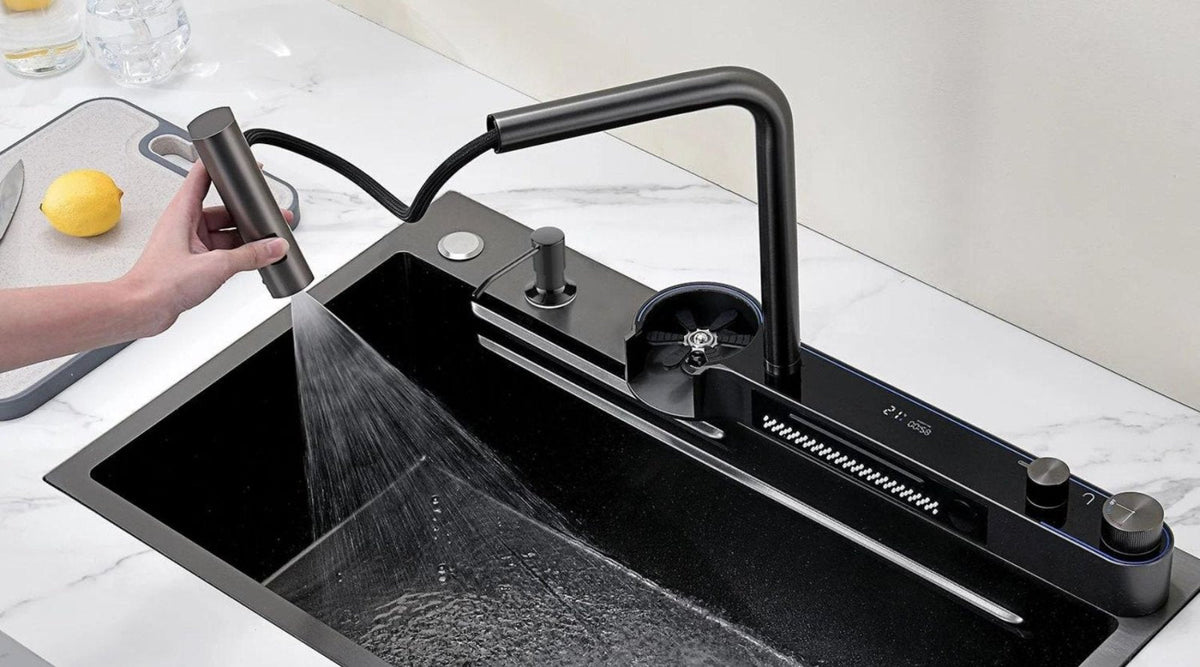
How to Clean and Maintain Your Stainless Steel Sink
At LEFTON, our mission is clear: to lead in the sanitary industry by providing top-notch products in Quality, Aesthetics, and Worthiness. Founded by passionate entrepreneurs dedicated to innovative and practical solutions for families worldwide, LEFTON stands as a symbol of unwavering commitment. Keeping your stainless steel sink looking pristine is essential to maintain the elegance and functionality it brings to your kitchen. Here's a comprehensive guide on how to clean and maintain your stainless steel sink effectively.
How to Clean Your Stainless Steel Kitchen Sink?
To preserve the beauty and longevity of your stainless steel sink, follow these steps:
Wash the Surface
- Use neutral soapy water to clean the coating surface of your sink. This gentle approach ensures that the sink is cleaned without causing any damage.
- Avoid using harsh cleaning agents such as ammonia, detergent powder, and toilet cleaner. These substances can damage the finish of your sink.
Dry Thoroughly
After washing, dry the entire surface thoroughly with a clean, soft cloth. This prevents water spots and maintains the shine of your stainless steel.
Avoid Abrasive Detergents
Do not use abrasive cleaning utensils or detergents on the faucet and its accessories. These can scratch and dull the finish. Read more tips on how to get scratches out of stainless steel sinks.

How to Maintain Your Stainless Steel Kitchen Sink?
Regular maintenance is key to keeping your sink in top condition. Here are some essential tips:
Clean Regularly
Clean your sink on a regular basis with warm, soapy water. This helps to remove daily grime and prevents buildup.
Rinse After Cleaning
After using any cleaning products, ensure that you rinse the sink thoroughly. This prevents any residue from affecting the surface.
Wipe Dry
Use a soft cloth to wipe the sink surface after rinsing. This removes any liquid residue and prevents water spots.
Prevent Damage
Avoid cutting food directly on the surface of the sink. Use a cutting board to protect your sink.
Do not leave sharp objects on the surface of the sink for extended periods. These can cause scratches or other damage.
Avoid Abrasive Products
Do not use abrasive cleaning products, sanding tools, steel wool, or bleaching products. These can severely damage the surface of your stainless steel sink.

Additional Tips for Sink Care
Weekly Deep Cleaning
Once a week, give your sink a more thorough cleaning. You can use a mixture of baking soda and water to create a paste. Apply it to the sink, then rinse and dry thoroughly.
Polishing
To restore shine, consider using a stainless steel polish. Apply according to the product's instructions, and your sink will gleam like new.
For more detailed cleaning and maintenance tips, visit our blog section. Keeping your stainless steel sink in excellent condition is simple with regular care and the right techniques. By following these guidelines, you can ensure that your sink remains a stunning centerpiece in your kitchen for years to come.
Discover more about our products and mission at LEFTON. We are dedicated to providing innovative solutions that enhance your daily life with style and efficiency.
Related Posts

Are Workstation Sink Accessories Universal? A Replacement Fit Guide
Match replacement boards, trays, racks, and grids to the surfaces that support them. Use a measurement record and exact model information to confirm fit.
Read more
How to Clean a Smart Toilet
Use a soft cloth, a model-approved mild cleaner and the toilet's own nozzle-cleaning mode. This guide separates safe routine care from maintenance that belongs in the product manual.
Read more
How to Keep Your RV Kitchen Sink from Smelling
Let’s face it—nothing kills the vibe of a cozy road trip faster than stepping into your RV and getting smacked in the face by a stinky kitchen sink. Whether you’re parked by a mountain stream or camping on the coast, a lingering odor coming from your drain can turn your home-on-wheels into a nose-wrinkling nightmare. But here’s the good news: smelly sinks aren’t some unfixable curse. With a few tricks up your sleeve, you can say goodbye to unpleasant smells for good. In this guide, we’ll break down how to keep your RV kitchen sink from smelling, why those odors show up in the first place, and the simple steps you can take to make sure your sink smells fresher than a pine forest after the rain. So, buckle up and grab your cleaning gloves—we’re diving nose-first into the battle against RV sink stink! Why Does Your RV Kitchen Sink Smell in the First Place? Before you start scrubbing and pouring mystery solutions down the drain, it helps to know what’s behind that stink. Here are the usual suspects: Food gunk buildup – Tiny scraps of food slip past your sink strainer, settle in the drain, and rot. Yuck. Grease and oil residue – Even if you rinse your pans, leftover grease sticks to pipes and traps odors. Bacteria party – Warm, damp environments are basically a spa day for bacteria, which create foul smells. Gray water tank funk – If your gray water tank isn’t cleaned regularly, those smells can back up into your sink. Dry P-trap – Unlike a house, RV sinks often lack a traditional P-trap. When water evaporates, sewer gases creep right back up. Understanding the “why” makes the “how” much easier. Let’s move on to the fun part—getting rid of the stink! How to Keep Your RV Kitchen Sink from Smelling: 10 Easy Tricks If you want your sink smelling fresh and not like last week’s tuna casserole, here are ten tried-and-true methods: 1. Flush with Hot Water Sometimes the simplest fix is the best. Run a kettle or pot of boiling water down your sink once a week. The heat melts away grease and helps flush out food debris. 2. Baking Soda and Vinegar Magic You’ve probably heard of this one, but it really works! Pour ½ cup of baking soda into the drain. Follow with 1 cup of white vinegar. Let it fizz like a science fair volcano for 15 minutes. Rinse with hot water. This combo neutralizes odors and kills bacteria without harsh chemicals. 3. Use Lemon or Citrus Peels After making lemonade or squeezing oranges, toss the peels down the sink. Run hot water while grinding them with the strainer in place (if you have a mini disposer or grinder attachment). The natural oils leave a fresh scent that lasts. 4. Keep the Strainer Clean Your sink strainer is the first line of defense against smells. Rinse it every day and give it a scrub with dish soap. Don’t let gunk linger—it’s the main stink trap. 5. Sanitize the Gray Water Tank The gray tank is where all that used water ends up, and let’s be honest—it can get gross. Use an RV-safe tank deodorizer or a homemade solution (like vinegar or baking soda) to keep it clean and odor-free. 6. Don’t Pour Grease Down the Drain This one’s huge! Collect cooking grease in a jar or disposable container and toss it in the trash. Grease in your pipes = smelly clogs waiting to happen. 7. Check the Air Admittance Valve (AAV) Many RVs use AAVs instead of traditional plumbing vents. If your AAV is old or broken, sewer smells can sneak into your rig. Replacing this small part is cheap and can make a massive difference. 8. Keep Traps Filled with Water If your RV sink has a trap, make sure it stays wet. When water evaporates, it stops blocking odors from your tank. Pour a little water down each drain regularly—especially before storing your RV. 9. Use RV-Friendly Drain Cleaners Skip the harsh chemicals—they can damage your pipes. Instead, use enzyme-based cleaners designed for RVs. They break down organic material without harming your plumbing. 10. Ventilate Your RV A little fresh air goes a long way! Run your vent fan when cooking or doing dishes to keep humidity (and odors) from sticking around. Preventing Future Odors: A Simple Routine The best way to keep your RV kitchen sink from smelling? Don’t let it get stinky in the first place. Here’s a quick routine you can follow: 1. Scrape plates before washing. 2. Wipe grease from pans before rinsing. 3. Clean the sink strainer daily. 4. Flush drains weekly with hot water or baking soda and vinegar. 5. Sanitize your gray tank monthly. FAQs 1. Can I use bleach in my RV sink?Yes, but sparingly. A little diluted bleach can sanitize, but too much can damage seals and harm your gray tank’s bacteria balance. 2. Why does my RV sink smell worse after driving?When you’re on the road, water sloshes around in the gray tank, releasing odors that can push back up into the sink. Make sure your vents and valves are working properly. 3. Is vinegar safe for RV plumbing?Absolutely! Vinegar is gentle, eco-friendly, and effective at neutralizing odors and breaking down gunk. 4. Do I need a special cleaner for RV sinks?Not necessarily. Avoid harsh chemicals and opt for natural cleaners, enzyme-based solutions, or RV-specific products instead. 5. What if my sink still smells after cleaning?Check the AAV, clean your gray tank thoroughly, and make sure your traps are holding water. Persistent smells are usually a sign of a ventilation or tank issue. Conclusion Your RV should smell like adventure, not like a backed-up kitchen sink. The trick to keeping your RV kitchen sink from smelling is a mix of good habits, simple maintenance, and a dash of natural cleaning power. From baking soda fizz bombs to lemon peels and gray tank TLC, these small steps add up to big results. So next time you hit the open road, you can breathe easy—literally—knowing your RV kitchen sink is fresh, clean, and road-trip ready.
Read moreMore from Lefton
Popular posts

Kitchen Sink Size Guide: Dimensions, Cabinet Fit, and Bowl Depth
Compare common kitchen sink sizes, learn which cabinet measurements matter, and check a 33-inch sink against your countertop, plumbing, and daily routine.
Read more
Your Guide to Picking the Perfect Bathroom Sink Faucet
Welcome to the world of LEFTON, where quality, aesthetics, and worthiness converge to redefine your bathroom experience! At LEFTON, our mission is crystal clear: to lead the sanitary industry with innovative and practical solutions, all dedicated to enhancing families' lives globally. In this article, we delve into the art of choosing the perfect bathroom sink faucet, with a spotlight on the groundbreaking Lefton Single-Hole Rotatable and Liftable Pull-Out Faucet. How to Choose a Bathroom Faucet Choosing the right bathroom faucet is like finding the perfect accessory for your favorite outfit – it should complement your style and serve its purpose flawlessly. Let's navigate through the essential factors to consider when making this decision. Find Your Faucet Center Before diving into the plethora of faucet options, determine your sink's faucet center – the distance between the handles. This crucial measurement ensures a seamless fit and functionality. Faucet Installation Types Once you've identified your faucet center, it's time to explore the different installation types available. Here's a rundown of the most common ones: Single-hole Faucets Single-hole bathroom sink faucets are a sleek and modern choice, combining the spout and handle into one unit. They are perfect for smaller sinks and minimalist designs. Centerset Faucets Centerset faucets have a standard three-hole configuration with the spout and handles all in one plate. Ideal for bathrooms with pre-drilled holes, they strike a balance between style and simplicity. Widespread Faucets For a touch of luxury, widespread faucets feature separate handles and a spout, giving you more freedom in customization. They are perfect for larger vanities and freestanding sinks. Vessel Faucets Vessel sinks deserve special attention, and vessel faucets are designed for them. These faucets are usually taller to accommodate the vessel's height. Wall Mounted Faucets To make a bold design statement, consider wall-mounted faucets. These are installed directly on the wall, offering a unique and stylish alternative. Faucet Handle Types The handles are where functionality meets personal preference. Choose the type that suits your lifestyle and aesthetics. One Handle Sleek and simple, one-handle faucets are easy to use and provide a streamlined look. They are often preferred for contemporary designs. Two Handles For a more traditional touch, two-handle faucets offer separate controls for hot and cold water. They are classic and timeless, adding a touch of elegance to your bathroom. Touchless Faucets Step into the future with touchless faucets! Perfect for maintaining hygiene, these faucets use motion sensors to activate water flow. Touch-Activated Faucets Combining modern technology with a touch of sophistication, touch-activated faucets respond to a gentle touch, offering convenience and style. Faucet Handle Styles Beyond the number of handles, the style of handles can significantly impact your faucet's overall look. Let's explore some popular options. Lever Handles Lever handles are ergonomic and easy to operate, making them a practical choice for all ages. They come in various designs, from contemporary to classic. Cross Handles Embrace a timeless look with cross handles. These handles add a vintage charm to your bathroom, reminiscent of classic designs. Knobs Simple and understated, knob handles provide a clean and minimalist appearance, perfect for modern bathrooms. Joystick Handles For a touch of innovation, consider joystick handles. They offer precise control and a contemporary feel to your bathroom. Finish Options The finish of your faucet is like the finishing touch to a masterpiece. Choose a finish that complements your bathroom's style. Further reading: How to Choose the Perfect Bathroom Faucet Finish? Faucet Construction Material matters when it comes to durability and performance. Lefton's BF2203 Faucet, for instance, boasts brass construction, ensuring longevity and resistance to corrosion. High-Quality Material Opt for faucets crafted from high-quality materials like brass for durability and longevity. Ceramic Disc Cartridges Invest in faucets equipped with ceramic disc cartridges for smooth operation and long-lasting performance. Other Faucet Features What sets the Lefton BF2203 apart? Let's uncover its unique features. WaterSense Lefton cares about the environment. The BF2203 is WaterSense certified, promoting water efficiency without compromising performance. Low Lead Safety first! Lefton faucets meet low lead standards, ensuring your water is safe for daily use. Pullout Spouts Experience convenience with pullout spouts. Lefton's innovative design allows for a sprayer that can be pulled out and docked precisely, preventing kinks or tangles. Easy Installation Lefton faucets are designed with the user in mind. Enjoy easy installation, saving you time and effort. [shortcode id="6826fa4d14fd3e19aa9e8beb" name="BF2204" layout="Single Product"] FAQs What Bathroom Faucets Do Experts Recommend? Experts often recommend faucets that balance durability, functionality, and style. Lefton's BF2203 ticks all the boxes, offering top-notch quality and innovative features. What Is the Best Material For Bathroom Faucets? Brass is a preferred material for bathroom faucets due to its durability and resistance to corrosion. Lefton's BF2203 is a shining example of quality brass construction. Are Bathroom Faucets Universal? While many faucets follow standard measurements, it's essential to measure your sink's faucet center to ensure a proper fit. Lefton provides options to suit various installations. What Kind of Bathroom Faucet Is Easiest to Clean? Faucets with easy-to-clean surfaces, like Lefton single hole bathroom facuet BF2204, make maintenance a breeze. The sprayface withstands mineral buildup, ensuring a long-lasting shine. Related: Bathroom Faucets 101 Conclusion Choosing the right bathroom sink faucet is not just about functionality but about enhancing your bathroom's overall aesthetic and efficiency. With Lefton's BF2203, you're not just selecting a faucet; you're choosing a blend of innovation, durability, and style. Dive into the world of LEFTON and transform your bathroom experience!
Read more
A Comprehensive Guide to Different Types of Kitchen Faucets
Faucets are often overlooked in the grand scheme of kitchen design, but their importance cannot be overstated. As the gateway to water in our homes, a kitchen faucet serves both functional and aesthetic purposes, making it a crucial element in any kitchen. In this guide, we'll dive into the world of kitchen faucets, exploring the different types and helping you choose the perfect one for your needs. Exploring Different Sink Faucet Types Single-Handle Faucet Ah, the single-handle kitchen faucet, a lone ranger in the kitchen landscape! With a single lever for both hot and cold water, it's a master of simplicity and efficiency. This faucet type, often adorned with a contemporary design, easily suits modern kitchens, keeping the visual clutter to a minimum. Double-Handle Faucet Now, let's turn our attention to the classic double-handle faucet. With separate handles for hot and cold water, this traditional beauty adds a touch of nostalgia to your kitchen. Twist those handles like you're adjusting the volume on your favorite song, finding the perfect temperature for your culinary creations. Pot Filler Faucet Ever felt the struggle of carrying heavy pots to the sink for a refill? Enter the pot filler faucet, mounted above the stove. This ergonomic marvel eliminates the need for pot schlepping, providing convenience and style. A true game-changer for those who believe in efficiency without compromising aesthetics. Bridge Faucet Picture this: a faucet with a bridge-like structure connecting the hot and cold handles. That's the bridge faucet, a perfect blend of old-world charm and contemporary functionality. Install this masterpiece in your kitchen and be ready to receive compliments from even the most discerning guests! Gooseneck Faucet Stretching gracefully like a swan's neck, the gooseneck faucet brings an elegant and functional touch to your sink. Its high arc allows for easy filling of tall pots and containers. No more struggling to wash large trays or watering cans—this faucet has your back (or should we say, your neck?). Straight Spout Faucet For those who prefer simplicity without sacrificing functionality, the straight spout faucet is a no-nonsense choice. With a straight and clean design, it gets the job done efficiently, proving that sometimes, less is more. Pull-Out Spout Faucets Need flexibility in directing your water stream? The pull-out spout kitchen faucet is your reliable accomplice. With a retractable hose, it provides extended reach and maneuverability, making dishwashing and sink cleaning a breeze. A true multitasker in the kitchen! Pull-Down Spout Faucet Embrace the force of gravity with the pull-down spout kitchen faucet. Pull the nozzle downward to access an extended spray wand, perfect for targeting hard-to-reach corners of your sink. This dynamic faucet is not only functional but also adds a touch of drama to your kitchen space. Touch-Activated Faucet Similar to the touchless faucet but with a twist, the touch-activated kitchen faucet responds to a gentle touch. This technological marvel combines convenience with modern aesthetics, making it a stylish addition to any contemporary kitchen. Stationary Faucet The stationary faucet, a kitchen stalwart, stands tall and unmovable. With a fixed spout, it offers reliability and durability. If you seek a faucet that doesn't dance around the sink but stays put, this is the one for you. Swivel Spout Faucet For those who want the best of both worlds—the stability of a stationary faucet and the flexibility of a swiveling spout—the swivel spout faucet is the answer. Turn and twirl this faucet to direct water where you need it, adding a touch of elegance to your culinary performance. Choosing a Kitchen Faucet: Finding Your Perfect Match Now that we've explored the diverse world of kitchen faucets, how do you choose the one that's perfect for your kitchen? Here are some considerations to keep in mind: Style and Aesthetics: Consider the overall design of your kitchen. Is it modern, traditional, or a mix of both? Choose a faucet that complements the existing style. Functionality: Think about how you use your kitchen. Do you need a faucet with a high arc for filling large pots, or would a standard spout suffice? Consider your daily kitchen routine. Installation: Some faucets may require additional installation steps, especially if they come with advanced features. Ensure you choose a faucet that aligns with your DIY skills or be ready to call in the professionals. Budget: Faucets come in a wide range of prices. Set a budget and explore options within that range. Remember, a stylish and functional faucet doesn't always have to break the bank. Brand and Reviews: Research reputable brands and read customer reviews. A well-regarded brand with positive reviews is likely to provide a reliable and durable product. Related Reading: A Comprehensive Guide to Choosing the Perfect Kitchen Faucet Top Rated Pull-Down Kitchen Faucet: Lefton KF2206 In the vast sea of kitchen faucets, the Lefton KF2206 emerges as a shining star. This pull-down faucet combines sleek design with practical features, making it a standout choice for any kitchen. With a high-arc spout and a retractable spray wand, the Lefton KF2206 offers the perfect blend of style and functionality. Key Features: Sense water without touch, display real-time temperature to prevent burns. Three-function sprayhead: switch between aerated stream, swing, and boost. Boost technology ups flow rate by 30% – press for faster filling or powerful cleaning. Easy-to-clean sprayface withstands mineral buildup. Single lever handle for easy water temperature adjustment; Lefton ceramic disc valves for a lifetime of durable performance. FAQs Q: Can I install a touchless faucet myself, or do I need a professional? A: Installing a touchless faucet can be DIY-friendly, but it depends on your plumbing skills. If you're unsure, it's always wise to consult a professional. Q: Are pull-out spout faucets and pull-down spout faucets the same? A: While they share similarities, the key difference lies in the direction of the spray wand. Pull-out spout faucets have a straight, upward pull, while pull-down spout faucets pull the spray wand downward.
Read more


