
How Long Do Smart Toilets Last?
There is no single reliable lifespan that applies to every smart toilet. Its ceramic body, valves, seals, heated seat, controls, and electronics are different components, and they do not necessarily need service at the same time. For a useful ownership estimate, look at the exact model's care requirements, repair options, parts support, and warranty instead of treating a broad number of years as a promise.

A smart toilet is both a plumbing fixture and an electrical appliance. That combination makes the usual question—“When will I have to replace it?”—more complicated than the age of the bowl. A worn component might be repairable; a difficult repair or unavailable part can change the decision even when the ceramic still looks good.
The most helpful way to compare models is to plan for service before you need it. Here is what to look for, what affects ownership, and how to weigh a repair when the time comes.
Think about the components separately
An integrated exterior can make a smart toilet look like one indivisible product. Inside, it performs several jobs: delivering and controlling water, operating the flush, sensing the user, warming the seat, and managing other model-specific functions.
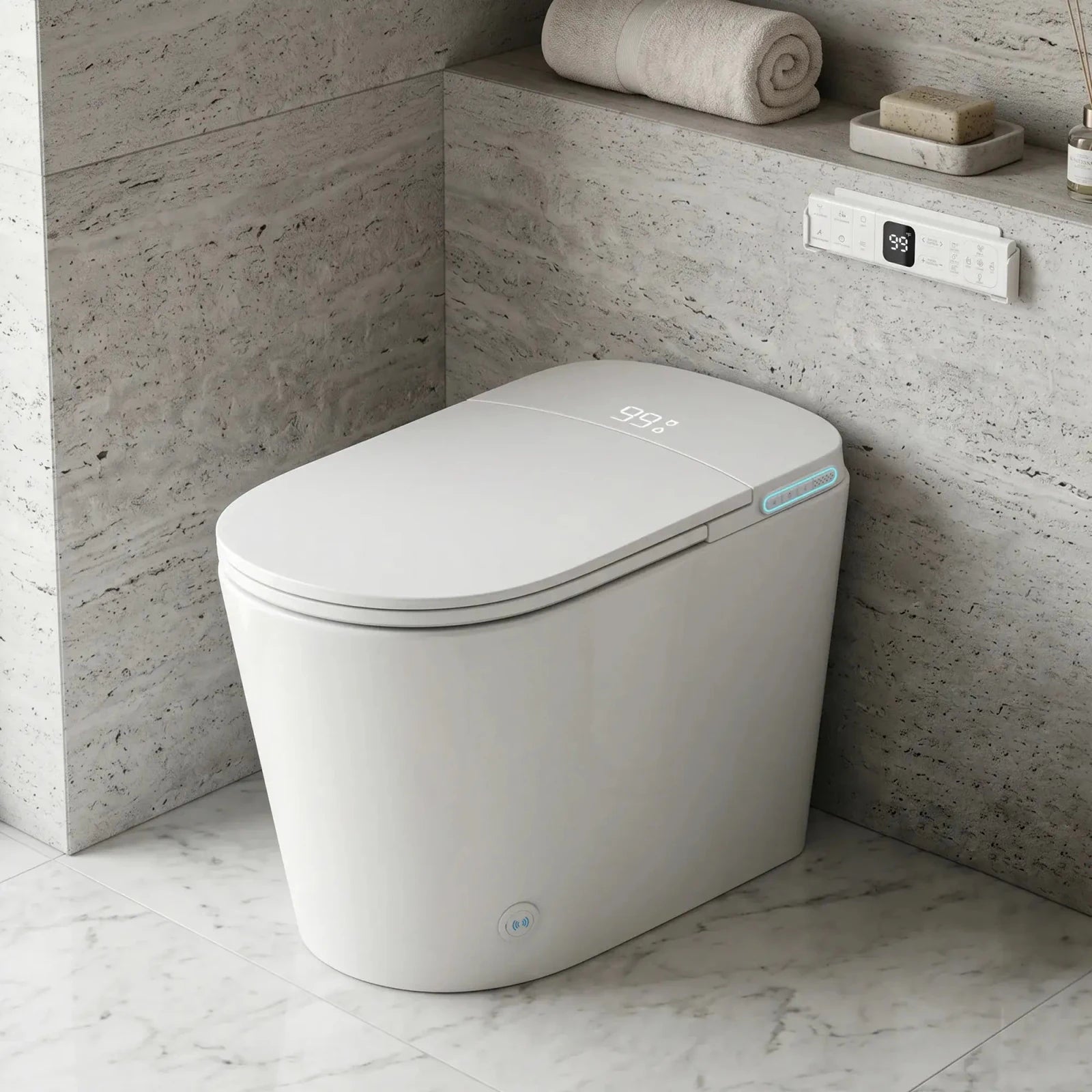
The Lefton ST01 specifications, for example, identify ceramic and plastic materials alongside powered features. That combination is a reason to ask about individual components, rather than assigning the entire product the expected life of a ceramic fixture.
Do not read this as a predicted failure order. It is a checklist for understanding the product you are buying. A useful answer identifies a component and a service process, not just a long warranty headline.
Look at installation, water, and everyday care
Correct installation gives a smart toilet the operating conditions specified for that model. Have the installer verify the required water supply, electrical provision, and access for future service. A clean finished appearance is valuable, but it should still be possible to reach the controls and connections needed for approved maintenance.
Water quality is another part of the plan. The U.S. Geological Survey explains that hard water contains dissolved minerals and can form scale. If deposits are a recurring problem in your bathroom, ask about model-compatible water treatment and care before adding a filter or chemical cleaner.
Cleaning habits also deserve attention. Use the product's instructions for each surface and avoid assuming that a bowl cleaner is appropriate for the seat, nozzle, or housing. Automated nozzle rinsing is a feature to understand alongside the manual's maintenance directions, not a reason to skip them.
Build a simple ownership record: installation date, model and serial number, purchase receipt, approved maintenance, and any completed service. If performance changes later, that history can help support identify the right next step. It also makes it easier to distinguish a recurring issue from an unrelated new one.
Read the warranty as coverage, not a countdown
A warranty tells you which problems may qualify for a remedy during a stated period. It does not predict the date a product will stop working, and it does not automatically include every ownership expense.
As checked in September 2026, Lefton's warranty policy gives smart toilets a two-year limited warranty for defects in materials, workmanship, and applicable functionality under normal use. It applies to the original purchaser, with proof of purchase potentially required. Product-specific terms also matter.
The policy allows remedies such as repair, replacement parts, or product or component replacement, depending on the issue and availability. It generally excludes removal, reinstallation, plumbing or electrical work, labor, and third-party services unless applicable law requires otherwise. It also lists exclusions involving improper installation, unsuitable care, unauthorized modifications, and normal wear.
Before arranging a covered repair, contact Lefton for instructions. Read the current policy alongside the documents supplied with your model. Do not apply another Lefton product category's warranty period to a smart toilet.
Keep the distinction practical: a two-year warranty does not mean a two-year lifespan, and a longer warranty elsewhere does not by itself prove a longer working life.

Ask about repairs before you buy
Serviceability is easier to evaluate when you ask specific questions. “Do you offer support?” is a start, but it leaves the most useful details unanswered.
Ask how the manufacturer diagnoses an issue, whether service is provided at home or through another process, and who is authorized to perform it. Find out whether an affected assembly can be serviced separately and what information identifies the correct replacement. These questions apply to both integrated toilets and separate electronic bidet seats.
Ask about parts without assuming permanent availability. A product sold today may use a different assembly from an earlier version with a similar name. Request model-specific information and an explanation of the options if a component is discontinued. A replacement-parts policy is useful; an unsupported promise that everything will always be in stock is not.
Finally, consider the bathroom during service. If it is your home's only toilet, the likely process and any expected interruption matter. Ask whether the unit can remain in use while a particular problem is assessed; never assume the flush remains usable after any electrical or water-system fault.
Compare a repair quote with the full replacement job
When a problem appears, start with an assessment rather than the toilet's birthday. Confirm the affected component, the approved remedy, and what the repair quote includes. An isolated, serviceable issue can lead to a different decision from repeated faults or damage to the main fixture.
Compare complete costs. A repair quote may include diagnosis, parts, labor, transport, or a return visit. Replacement can include removal, disposal, a new unit, installation, and any changes required by a different footprint or utility connection. Comparing only a part price with a sale price leaves out much of the job.
Avoid a universal rule such as “replace it after five years” or “repair whenever the bill is below half the purchase price.” Those shortcuts ignore the condition of the rest of the toilet, the confidence of the diagnosis, service availability, and your bathroom's needs.
For a Lefton purchase, review the ST01's current documents and ask Lefton support about the service questions that matter to your home. Existing owners can use the manual library to keep model-specific care information with their records.

Frequently asked questions
Can a smart toilet last as long as a regular toilet?
It may remain useful through component service, but comparing only ceramic bodies leaves out the powered features. Ask about the model's repair options and care requirements. A general claim about conventional toilets cannot establish a smart toilet's lifespan.
Do I need a whole new toilet if the bidet stops working?
Not automatically. The answer depends on the cause, model design, available parts, and approved service options. Have the fault assessed before deciding. An integrated appearance does not prove that every problem requires complete replacement.
Does a longer warranty mean better reliability?
Warranty length is one comparison point, not a reliability measurement. Consider exclusions, covered expenses, the claim process, and product-specific evidence. Two warranties with the same number of years can offer different practical coverage.
Can hard water shorten a smart toilet's useful life?
Scale can create maintenance concerns, but water hardness alone cannot predict a replacement date. Check local water conditions and follow the model's instructions. Confirm filter compatibility and approved cleaning methods before changing the setup.
How long is Lefton's smart toilet warranty?
The policy reviewed in September 2026 specifies a two-year limited warranty for smart toilets. Check the current warranty and your model's documentation for applicable terms. The coverage period is separate from the product's eventual service life.
Share this
Popular posts





Leave a comment