
Smart Toilet Flush Performance: How to Read GPF, MaP and Real-World Results
Smart toilet flush performance should be judged with several pieces of evidence: gallons per flush (GPF), standardized waste-removal testing such as a MaP score, verified product certification where applicable, the flush system's design and the water and drain conditions required by the exact model. A forceful sound or one successful demonstration cannot replace those checks.
GPF tells you how much water a rated flush uses. MaP describes how much standardized test media a toilet cleared under a specific protocol. Neither number alone measures every part of daily performance, such as bowl-surface cleaning, drainline transport, noise, reliability or the effect of a bathroom that does not meet the installation requirements.

Smart Toilet Flush Performance at a Glance
| Evidence | What it tells you | What it does not prove |
|---|---|---|
| GPF | Rated water volume used for the specified flush mode | Waste removal, bowl cleaning or certification by itself |
| MaP score | Highest standardized test-media mass cleared under the MaP protocol | A no-clog guarantee in every home or every type of flush quality |
| WaterSense label | Independent certification to EPA efficiency and performance criteria | That every 1.28 GPF product automatically qualifies |
| Specification sheet | Model-specific water, power, dimensions and published performance values | That the bathroom meets those conditions |
| Installed result | How the toilet behaves with the actual supply, drain and setup | Why a problem occurs without proper diagnosis |
What GPF Means
Gallons per flush is a water-use value, not a force rating. A 1.28 GPF toilet is designed to complete the rated flush with 1.28 gallons, or about 4.8 liters. Good bowl geometry, trapway design and controlled water delivery can use that volume effectively. More water does not automatically mean better waste removal, and a lower number does not automatically mean poor performance.
The U.S. EPA says WaterSense labeled tank-type toilets use 1.28 GPF or less and are independently certified for efficiency and performance. EPA also describes performance areas that include mixed-media flushability, bowl-surface cleaning, drainline waste transport and waste extraction. The label therefore represents more than a water-use number.
EPA currently states that Version 1.2 of its tank-type toilet specification remains in effect while the effective date of Version 2.0 is paused. Check the current EPA page when publishing or comparing certification claims because program status can change.
What a MaP Score Means
Maximum Performance (MaP) testing uses standardized test media and toilet paper to measure waste extraction. Under the published protocol, testing progresses through defined mass levels. The recorded score is the highest loading that the sample clears while meeting the protocol's pass requirements and restoring the minimum trap seal.
A 600g MaP score therefore refers to a standardized 600-gram test load. It is not the weight of water, a motor-power rating or a statement that a household should deliberately load the toilet to that level. It also does not cover every real-world variable, including unsuitable objects, drain problems, incorrect installation or maintenance condition.
Higher scores indicate more test media cleared within the same protocol, but selection should not become a race for the largest number. Once a model meets the performance level needed for the household, fit, water use, bowl cleaning, service access, parts support and verified installation requirements may be more useful differentiators.

WaterSense, MaP and MaP PREMIUM Are Not Interchangeable
WaterSense is an EPA labeling and certification program. MaP is an independent, voluntary performance-testing program with a searchable toilet database. MaP PREMIUM is a separate designation that combines a minimum MaP score with additional efficiency and WaterSense requirements.
This distinction prevents three common errors. A 1.28 GPF specification does not by itself prove a WaterSense label. A 600g MaP score does not by itself establish MaP PREMIUM. And a manufacturer's published MaP rating should not be presented as a current database listing unless the exact brand and model can be matched to supporting documentation.
Real-World Conditions Still Matter
Water Supply
Some integrated smart toilets use a built-in tank, pump or electronically controlled valve, but they still have model-specific supply limits. Compare the static pressure and required flow in the specification sheet with the bathroom's actual conditions. A pressure reading alone may not establish that the required flow is available while other fixtures operate.
Drain and Vent Condition
A toilet cannot compensate for every partial blockage, drain defect or venting problem. Repeated slow clearing, gurgling, rising bowl water or problems affecting nearby fixtures need plumbing diagnosis. Do not keep testing a flush when overflow is possible.
Installation and Setup
The correct flange connection, stable mounting, water connection and model setup matter. A specification number assumes the product is installed and operated as intended. For powered toilets, controls, sensors and outage behavior also depend on the exact model.
Bowl Condition and Use
Approved cleaning and maintenance help preserve bowl-surface performance. Foreign objects, excessive paper or products labeled non-flushable can exceed what any standard test is designed to represent. Follow local wastewater guidance and the toilet manual rather than relying on marketing descriptions such as “powerful flush.”
How to Compare Smart Toilet Flushing Before You Buy
- Confirm rated flush volume. Identify the exact GPF for each flush mode and market version.
- Find the supporting performance source. Look for a current MaP listing or report, certification listing or approved manufacturer specification.
- Read the test correctly. Separate water use, waste extraction, bowl cleaning and drainline transport.
- Verify bathroom conditions. Match pressure, flow, power, drain and installation requirements to the actual room.
- Review support. Check the current manual, warranty, parts and service path.
- Keep claims model-specific. Do not apply one toilet's rating to an entire category or product family.
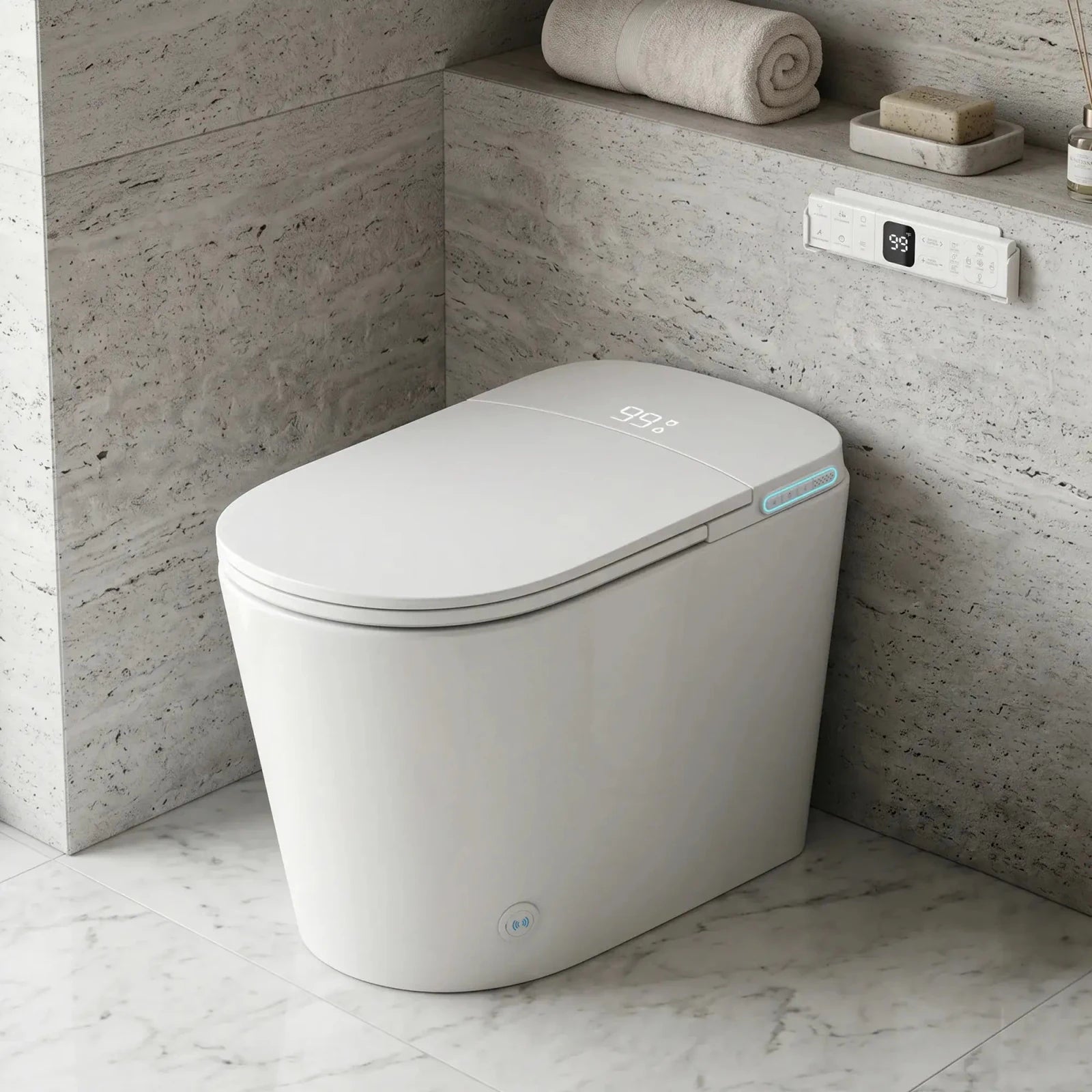
Lefton ST01 Flush Performance Example
Lefton's current ST01 product page and official specification sheet list the following model values. They provide a useful example of how to read efficiency, test performance and installation conditions together.
| ST01 item | Published value | Interpretation |
|---|---|---|
| Flush rate | 1.28 GPF | Model water-use value; not a WaterSense certification claim by itself |
| MaP rating | 600g | Published waste-removal rating; not a MaP PREMIUM claim by itself |
| Flush architecture | Built-in tank | Supports the model's flush system but does not remove supply requirements |
| Water supply | 17.4-87 PSI; at least 5.3 GPM listed | Model-specific installation condition to verify |
These figures are attributed to current Lefton documentation. Buyers who need formal certification evidence should ask for the matching current listing or test report before using a logo or certification requirement in a project specification.

Frequently Asked Questions
What is a good MaP score for a toilet?
A useful score is one supported by the current MaP protocol or a matching report and appropriate for the project's requirements. MaP tests defined levels, and 600g is one recognized test level. Compare the score with water use, certification needs, fit and support rather than choosing by score alone.
Does a higher MaP score mean a better toilet?
It means the tested sample cleared more standardized media under the protocol. It does not automatically mean better bowl cleaning, quieter operation, easier service or better performance in a bathroom with unsuitable supply or drain conditions.
Is 1.28 GPF enough for a toilet?
It can be. EPA notes that modern WaterSense labeled toilets use 1.28 GPF or less while meeting efficiency and performance criteria. Evaluate the complete model and supporting tests instead of treating water volume as the only performance measure.
Does 1.28 GPF mean a toilet is WaterSense certified?
No. The water-use value is one part of the program. EPA says the WaterSense label requires independent certification to applicable efficiency and performance criteria. Verify the exact model in current program documentation.
Can low water pressure affect a smart toilet flush?
It can affect models that require a stated pressure and flow, even when a built-in tank is present. Compare the exact specification with measured conditions. If an installed toilet develops a weak or failed flush, stop at safe external observations and use the model's troubleshooting path.
Smart Toilet Flush Performance: Final Verdict
A strong comparison combines GPF, a correctly interpreted MaP score, verified certification when required and the conditions of the actual bathroom. Read each source for what it measures, keep labels separate and reject unsupported shortcuts such as “1.28 GPF means WaterSense” or “600g means no clogs.”
To evaluate a documented integrated model, review the current Lefton ST01 flush specifications and confirm the published water-supply requirements with a qualified installer before purchase.
Partagez ceci
Articles populaires





laissez un commentaire